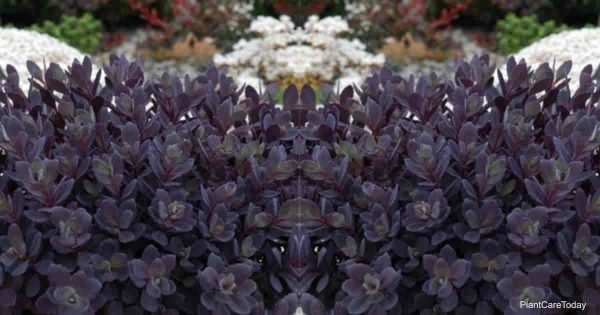
Blue Pearl Sedum (SEE-dum) is a Sedum hybrid developed by Chris Hansen, a plant breeder fascinated with these ultra-hardy perennials.
This perennial succulent belongs to the sedum or stonecrop family.
It is sometimes called Sedum Blue Pearl.

Blue Pearl Sedum Care
Size & Growth
This moderate grower attains a height of about 6″ inches and a spread of 18″ to 20″ inches.
The foliage of SunSparkler® Blue Pearl Sedum is a distinctive, deep purplish-blue.
Several non-patented varieties are deep, bluish-green.
Flowering & Fragrance
Late in summer, Blue Sedum produces beautiful clusters of showy pink flowers atop strong stems.
The fragrant blossoms are attractive to hummingbirds, butterflies, and other pollinators.
Because they are late-blooming, they provide an important source of pre-winter nourishment for these creatures.
Light & Temperature
All types of sedum are winter hardy in USDA hardiness zones 4-9.
They prefer full sun but do well in a 50-50 sun/shade setting.
Watering & Feeding
Pearl Blue Sedum is drought tolerant and does well with deep, occasional watering.
Avoid overhead watering. Instead, water containers from below using a soaker hose or drip irrigation.
Soil & Transplanting
Outdoors, plant in any well-draining soil in a sunny location.
In the landscape, the plant is tolerant of clay, loamy or sandy soil or any combination of the three.
Good drainage is the most important quality. Plant outdoors in the spring after all danger of frost has passed.
In containers, use a cactus mix or a 50-50 mix of good potting soil and coarse sand.
Be sure to use a breathable pot (terra cotta is best) with plenty of drainage holes.
Large container plants can stay outdoors year-round in temperate climates.
Bring indoors to use as houseplants in areas experiencing hard freeze.
Grooming & Maintenance
Hardy sedum requires little maintenance.
When kept as landscape plants, you may wish to trim them back early in the springtime to encourage new growth.
If necessary, divide them in spring to provide more room to grow.
Is The Blue Pearl Plant Toxic Or Poisonous?
All types of sedum are non-toxic, and some people even toss the leaves into salads and soups.
Is pearl blue sedum Plant Invasive?
Sedum spreads quickly, but it is not considered invasive.
If your Pearl Blue Sedum wanders into areas where you don’t want it, simply lift it and move it to another location.
The roots are shallow, so this is an easy handle.
Suggested Blue Pearl Sedum Uses
This cheerful, colorful, easy-to-grow succulent is an excellent choice in patio planters or planted as a border, ground cover, or addition to a rock garden or rock wall.
It is drought-tolerant, water-wise, and fire-resistant, so it’s a good choice for hot, dry areas subject to summer fires.
Blue Pearl Sedum is also salt tolerant, so it does well in seaside gardens, and it is deer tolerant, so it will do well in areas where deer may be problematic.
Its pretty, fragrant flowers make it an excellent addition to your butterfly or pollinator garden, and its good looks help it fit right into a wide variety of themed gardens (e.g., rustic, the Mediterranean, Zen and Asian themes).

